1. The institutional framework: Kairali Arts Music Consultants Centre
The preservation of Indian classical traditions in the diaspora requires a delicate equilibrium between rigorous adherence to ancient methodology and the adaptive requirements of a modern, multi-ethnic urban environment. In the United Arab Emirates, specifically in Sharjah, that mission has been championed for over three decades by the Kairali Arts Music Consultants Centre.
Founded in 1991 by Guru Mini Radhakrishnan, the institution initially served a small cohort of around 100 learners in a personal, focused environment that prioritised consistency and respect for the art form. Formal establishment followed in 2003, marking a significant milestone in the institutionalisation of Indian classical dance and Carnatic music in the UAE.
The institutional philosophy is built on a modernised Gurukulam model, a structured five-stage progression that ensures students don't merely learn songs as shortcuts, but develop a lifelong artistic foundation characterised by technical precision and emotional expression.
2. The faculty: Syamili Krishnan V
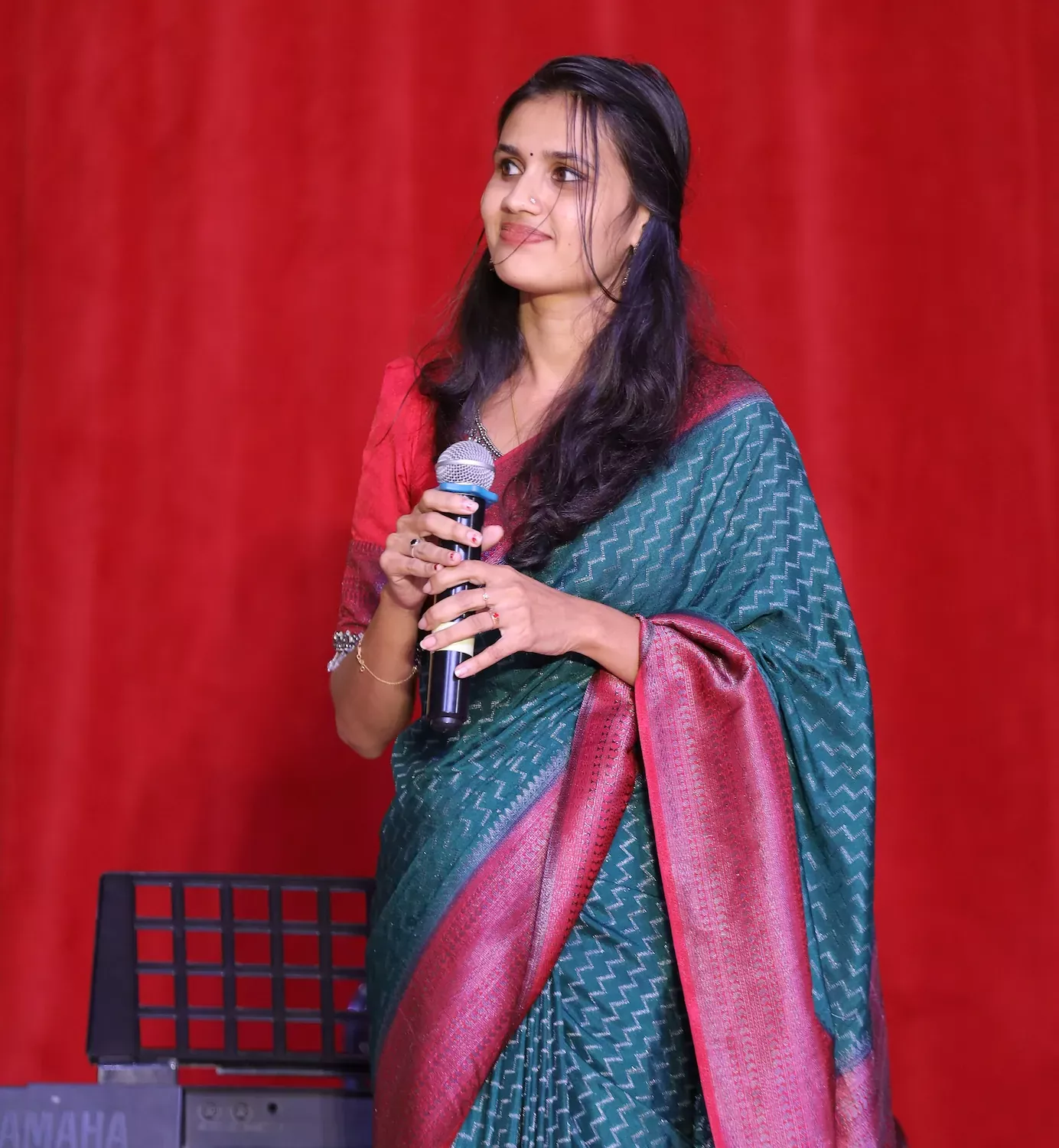
The efficacy of any musical institution is defined by the quality of its faculty. Syamili Krishnan V serves as the Carnatic vocal and Veena instructor at Kairali Arts Centre, bringing academic rigour and performance expertise to the institution.
Academic credentials
- M.A. (Music), Kannur University, 2024
- B.A. (Music), Sree Swathi Thirunal College of Music · University of Kerala, 2020
Both institutions are renowned for strict adherence to classical standards, ensuring her foundation in raga lakshana (theoretical grammar) and lakshya (practical application) is impeccable.
Teaching specialisation
- Carnatic Vocal · Veena · Bhajans · Devotional Music
- Languages: Malayalam · Tamil · Hindi · Telugu · English
- Voice culture · shruthi alignment · raga development · stage readiness
Syamili's pedagogy is tailored to the individual learner. Some students arrive with natural Bhavam but lack Thalam; others know the Swaras but struggle with vocal projection. Her work is to align all of these, pitch, rhythm, breath, and meaning. One of her most-requested formats is single-song performance coaching for school competitions, weddings, temple programmes, cultural festivals, and TV auditions, including microphone handling, audience engagement, and lyrical clarity.
3. Foundations of Carnatic music
Carnatic music is a highly sophisticated system of classical music from South India, characterised by a deep connection to spirituality, mathematics, and emotion. It is built on a structured framework of melody and rhythm that requires simultaneous development of the mind, the ear, and the memory.
Three concepts hold the system up: Shruthi (pitch foundation), Swara (the seven basic notes), Ragam (melodic personality), and Thalam (rhythmic cycle). Layered on top of these is the language of Gamaka, the ornamentations that give a raga its character.
4. Shruthi, the tonal foundation
In the Carnatic tradition, Shruthi is the pitch foundation, the tonal reference upon which all musical movement is built. It is considered the mother of music, Shruthi Mata, signifying its nourishing and essential role.
Unlike Western systems that may use absolute pitch, Carnatic music uses a relative pitch (Aadhara Shruthi) chosen by the performer to suit their vocal or instrumental range. The system identifies 22 Shrutis, the smallest intervals of pitch the human ear can detect and a musician can produce. These microtonal intervals allow for the subtle nuances and oscillations that give the form its distinct identity.
5. The Sapta Swaras, seven basic notes
The primary notes of Carnatic music are the Sapta Swaras, believed to have originated from the sounds of nature and animals.
| Swara | Sanskrit | Natural Inspiration | Western Equivalent |
|---|---|---|---|
| Sa | Shadjam | Peacock | Do (C) |
| Ri | Rishabham | Bull / Cow | Re (D) |
| Ga | Gandharam | Goat | Mi (E) |
| Ma | Madhyamam | Heron | Fa (F) |
| Pa | Panchamam | Nightingale | Sol (G) |
| Da | Dhaivatham | Horse | La (A) |
| Ni | Nishadam | Elephant | Ti (B) |
Of these seven, Shadjam (Sa) and Panchamam (Pa) are Prakruthi, fixed swaras that never change position, acting as anchors for the melody. The other five are Vikruthi, variable swaras that admit several varieties, leading to the 12 Swarasthanas (pitch positions) and 16 Swaranamas (extended nomenclature) unique to Carnatic music.
6. Ragam & the 72 Melakarta
A raga is a melodic personality, more than a scale; it has emotion, movement, and mood. Each raga is defined by its Arohanam (ascending notes) and Avarohanam (descending notes), and is further characterised by specific phrases and Gamakas (ornamentations).
Ragas are classified through the Melakarta system, a mathematical framework of 72 parent ragas. Parent scales must be:
- Sampoorna, complete, containing all seven notes
- Krama, linear in ascent and descent
- Symmetric, same notes in arohanam and avarohanam
The number 72 comes from combining variations of the variable notes: 6 combinations of Ri/Ga × 6 combinations of Da/Ni = 36 variations, doubled to account for the two types of Madhyamam (Shuddha M1 and Prati M2).
7. Thalam, the rhythmic cycle
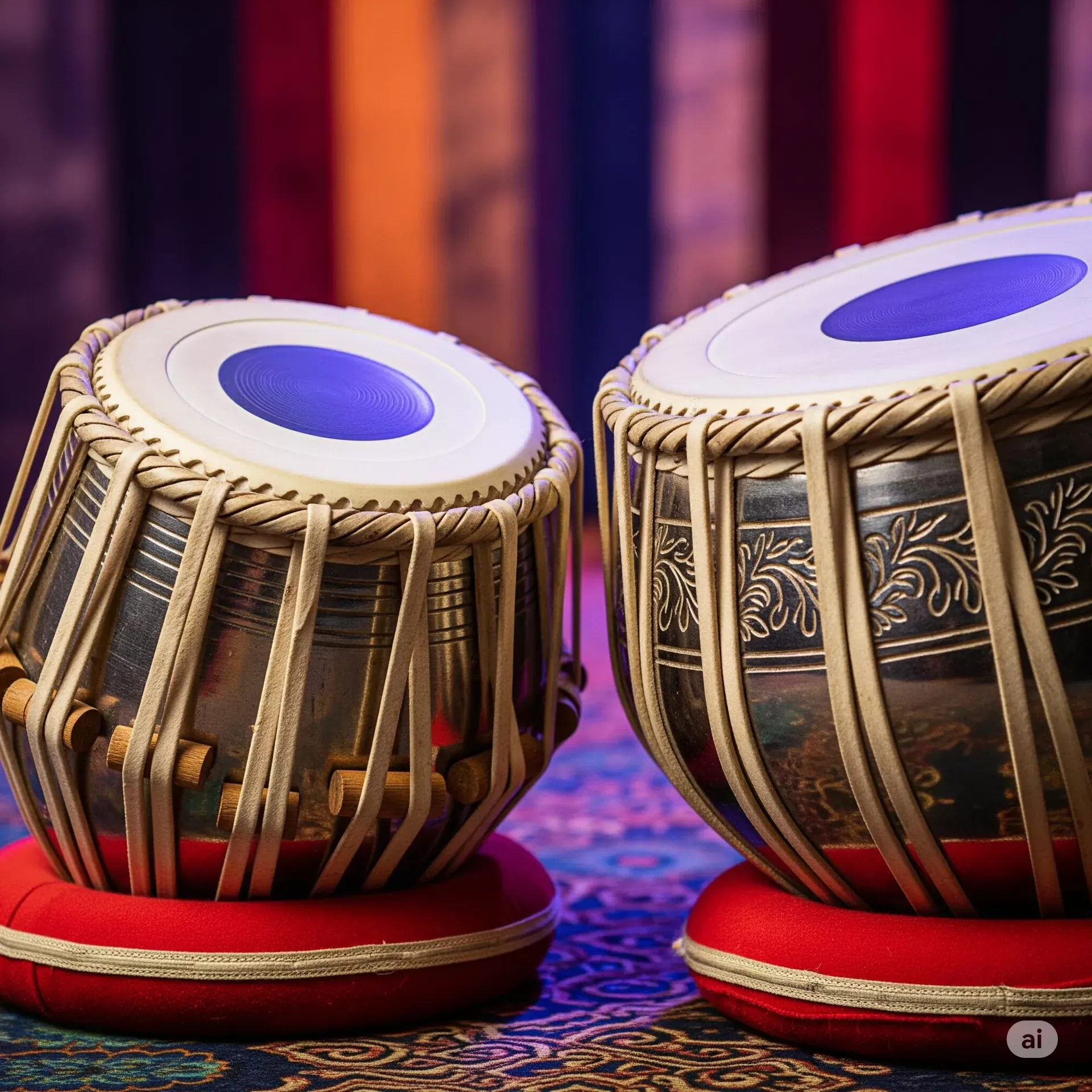
Thalam is the rhythmic cycle that governs time and structure. It is considered the father of music, Laya Pitha. The system is highly mathematical. Adi Thalam, the most common, is an 8-unit cycle (8 Aksharams). Training in rhythm improves a student's concentration, memory, and coordination, and is one of the few disciplines that visibly transfers to school performance, mental arithmetic, and sport.
8. Gamaka, ornamentation that gives the raga life
The beauty and distinct identity of Carnatic music lives in its Gamakas, the delicate ornamentations and oscillations applied to a note to give it character. Without Gamakas, a raga is described as "a skeleton without flesh." Gamakas are integral to Raga Lakshana rather than optional decoration.
Five common Gamakas
- Kampitam, a gentle shake or oscillation around a central pitch; the "heartbeat" of Carnatic singing, essential for ragas like Bhairavi and Todi.
- Jaru, a graceful glide or slide between notes, connecting them like pearls on a string.
- Spuritam, a forceful reiteration of a note, adding excitement and vigour to phrases.
- Andolana, a slow, measured oscillation that creates a sense of contemplation and depth.
- Nokku, a deliberate emphasis on an upper note before settling, used to inflect classical compositions.
The execution of these on the Veena requires immense precision, the musician must manipulate the strings to touch the microtonal frequencies between fixed swarasthanas, which is exactly the discipline Syamili teaches her instrumental students.
9. The Carnatic Trinity, and why ~70% of concerts are still their work
The modern framework of Carnatic music was solidified in the 18th and 19th centuries by three legendary composers, the Trinity of Carnatic Music: Saint Tyagaraja, Muthuswami Dikshitar, and Syama Sastri. All three were born in Thiruvarur, Tamil Nadu, and their kritis remain the backbone of modern concerts and pedagogy.
| Composer | Lifespan | Language | Distinguishing Mark |
|---|---|---|---|
| Tyagaraja | 1767-1847 | Telugu | 600+ kritis · emotional Bhakti to Lord Rama · ease of singing |
| Muthuswami Dikshitar | 1775-1835 | Sanskrit | Scholarly · structured · majestic slow tempo (Vilamba Kala) · introduced rare ragas |
| Syama Sastri | 1762-1827 | Sanskrit / Telugu | Master of Laya · most kritis on Goddess Kamakshi · rhythmic precision |
Approximately 70% of items performed at concerts today are kritis by the Trinity, a fact that shapes our entire syllabus.
10. The Kairali path, five stages, real progression
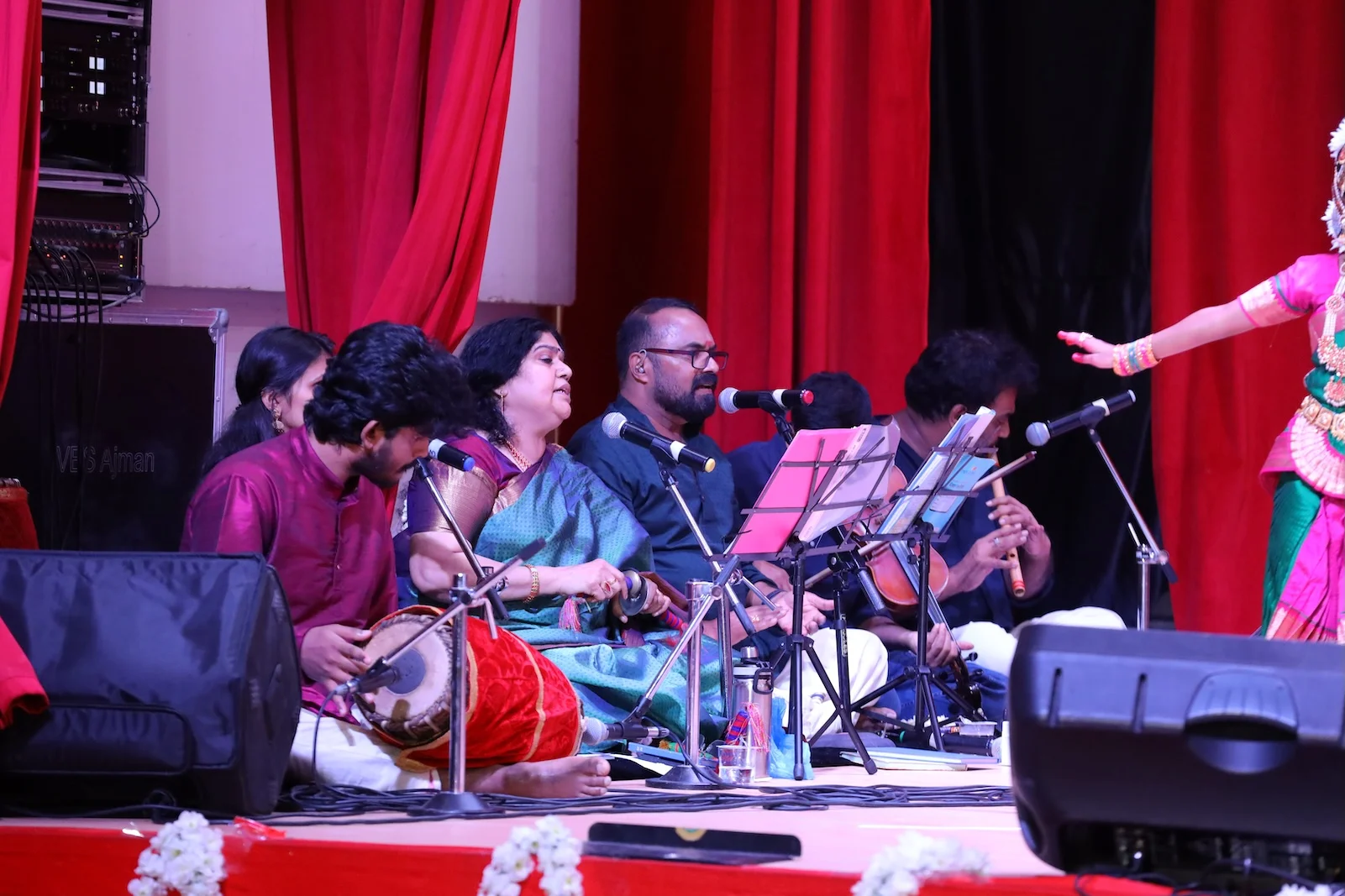
Rather than the open-ended "keep coming until you're good" model many academies run on, Kairali defines five concrete stages with explicit milestones:
| Stage | Grade | Instructional Focus |
|---|---|---|
| Foundational | D | Sarali Varisai · Janta Varisai · Alankarams · Shruthi practice |
| Elementary | C | Geethams · basic rhythm · breath control |
| Intermediate | B | Swarajathis · Varnams · Kritis · voice modulation |
| Advanced | A− | Kalpana Swaras · basic improvisation · performance discipline |
| Professional | A · Kairali Certified Artist | Manodharma · concert readiness · advanced ragas · recording |
Central to this is Sargolsavam, the centre's annual stage festival that has run since the early 1990s. It functions as a pedagogical tool, not just a recital; the discipline of preparing for stage and presenting in front of a crowd is itself part of the curriculum.
11. The adult learner's advantage
A common myth is that classical music must be started in childhood. In practice, adults often progress quickly, they bring self-motivation, emotional interpretation, and lived cultural understanding that children take years to develop. Neuroplasticity research shows the adult brain remains highly adaptable for musical pattern learning.
| Level | Time to proficiency | Repertoire you can sing |
|---|---|---|
| Hobbyist | 6-12 months | Simple devotional songs · Sarali / Janta varisai foundation |
| Intermediate | 2-3 years | Varnams · Kritis · community-stage performances |
| Advanced | 5-10 years | Concert-ready · Manodharma · complex ragas · recording sessions |
12. Competitions & auditions
Syamili specifically prepares students for the competitive arena: TV auditions, music reality shows, school and intercultural competitions. Coaching is aligned with the typical judging panels at events like Navaratri Navrang and the Chhandayan International Competition:
- Shruthi adherence, perfect alignment with the base pitch throughout the performance
- Thalam accuracy, rhythmic control even in complex cycles
- Raga & Gamaka nuances, correct execution of the subtle ornamentations that define a raga's personality
- Pronunciation & lyrical clarity, preserving the meaning of Sanskrit / Telugu / Tamil lyrics
- Overall presentation, stage presence, confidence, and audience engagement
13. Sharjah neighbourhoods we serve
Families across Sharjah, Dubai and Ajman commute to Kairali. The studio in Umm Tarafa is positioned to serve these residential clusters in particular:
| Neighbourhood | Demographic profile |
|---|---|
| Muwaileh Commercial | Proximity to University City, academic staff and education-focused families. |
| Al Nahda (Sharjah) | High density of Indian expat families; commuting parents seeking after-school activities. |
| Al Majaz / Corniche | Cultural and recreational hub, families that participate in public festivals and stage events. |
| Al Qasimia | Heart of the city, established residential base with traditional cultural values. |
| Al Taawun | High-rise families who value structured arts programmes and communal learning. |
| Umm Tarafa · Al Gharb | Walking distance from the studio itself. |
14. Frequently asked
Where can I learn Carnatic vocal music in Sharjah?+
Carnatic vocal classes for children, teenagers and adults are taught at Kairali Arts Music Consultants Centre, Mohd Al Ahmadami Building, M7 Mezzanine Floor, Umm Tarafa, Sharjah. The lead Carnatic instructor is Syamili Krishnan V, M.A. (Music), Kannur University.
How long does it take to learn Carnatic music?+
As a hobbyist you can sing simple devotional songs in 6-12 months. Intermediate (Varnams and Kritis, community stage performance) takes 2-3 years. Concert-ready Manodharma typically takes 5-10 years of consistent practice.
Can adults start learning Carnatic music?+
Yes. Adults often progress quickly because of self-motivation, emotional range, and discipline. Neuroplasticity research shows the adult brain remains highly adaptable for music learning.
Are Veena classes available in Sharjah?+
Yes. Veena training is taught alongside Carnatic vocal at Kairali Arts Centre by Syamili Krishnan V. Posture, mizrab technique, alankaras and gamaka rendering on the strings are covered.
What are the fees for Carnatic music classes in Sharjah?+
Monthly tuition starts in the AED 250-350 range depending on level and format. Free trial classes are available for new students. Contact the Kairali team to book a trial.
By balancing the rigid mathematics of the Melakarta system with the soulful expression of Gamakas and the devotional depth of the Trinity's kritis, Kairali ensures that the rich tradition of South Indian classical music remains vibrant, accessible, and human.
Begin your own training
Free trial · in-person at the Sharjah studio or live online from anywhere. Whether you're four or sixty-four, you'll move through the same five-stage Kairali path that has trained thousands of students for over three decades.