Why it works
Your room is the biggest audio component you own
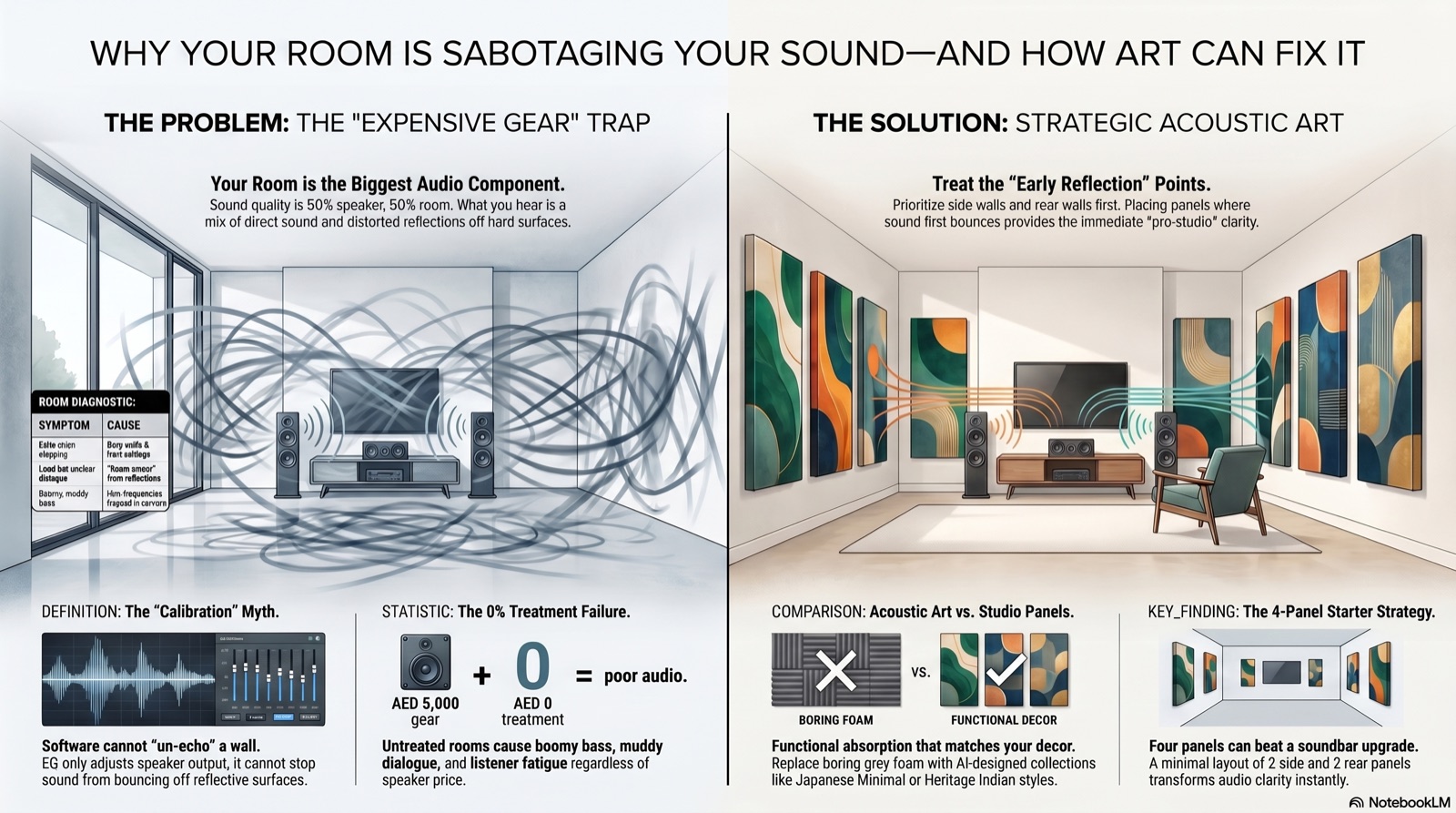
What you hear is never just the speaker. It is direct sound from the speaker plus reflected sound bouncing off bare walls, glass, tile and hard ceilings. Those late reflections create echo, reverb, flutter echo, boomy bass and unclear speech — so even an expensive system can feel harsh and fatiguing.
Software “room calibration” can only change what the speaker sends out; it cannot stop sound from bouncing. The fix is physical: place absorption at the early reflection points — side walls, rear wall, ceiling and corners. Even four to six well-placed panels can do more than upgrading the speaker itself.
The diagram above is the whole idea at a glance: the tangled, distorted sound of an untreated room on the left, and the clean, controlled clarity of a room with strategic acoustic art on the right. Want the full explanation? Read the guide: You Bought the Speakers, But You're Listening to Your Room.
An honest note: these panels deliver acoustic absorption — reducing echo and reverb inside a room. That is different from full soundproofing (stopping noise passing between rooms).