The instrument
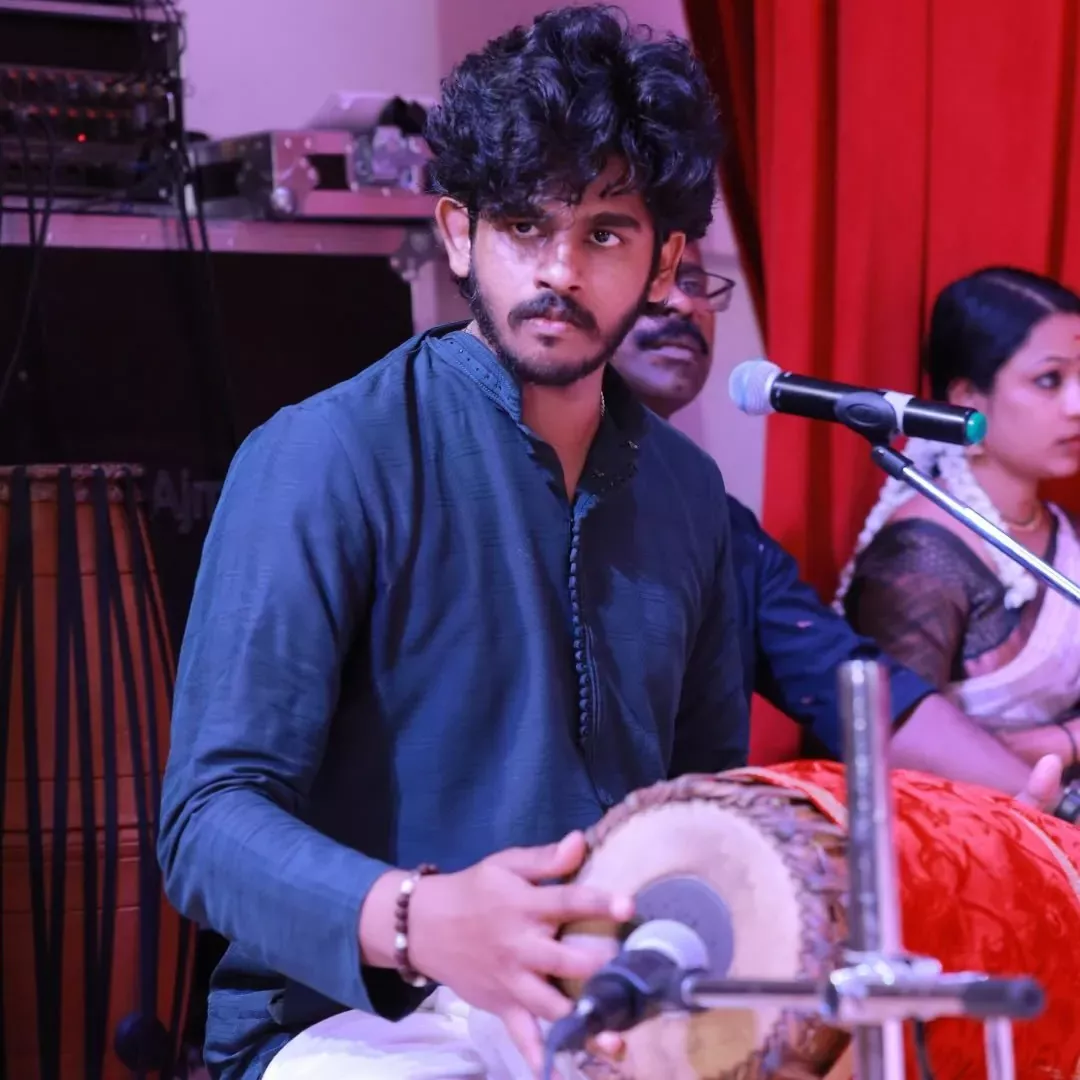
The mridangam is hand-shaped from a single block of jackfruit wood, with two playing heads tuned a fifth apart. The right head produces the clear sa-pa pitch; the left provides the deep resonant bass. The black 'soru' on the right head is what gives the instrument its singing tone.
The vocabulary
Mridangam playing is built on syllables, sollus, like ta, di, tom, nam. These syllables combine into rhythmic phrases, which combine into korvais (resolved patterns), which combine into a tani avartanam (the percussion solo at the heart of every concert).
Where it sits
Mridangam is the lead percussion instrument in Carnatic concerts, classical dance recitals, devotional music and modern fusion ensembles. Tabla (North Indian) and ghatam (clay-pot) are sister disciplines that share much of the same tala-time grammar.